
Brotherbear Acres · First-hand breed guide
Caucasian Shepherd Dog
Caucasian Ovcharka · Caucasian Mountain Dog
A powerful livestock guardian shaped by independence, judgment and deep loyalty to the people, animals and territory it considers its own.
Our perspective
Living with and raising Caucasian Shepherds since 2015
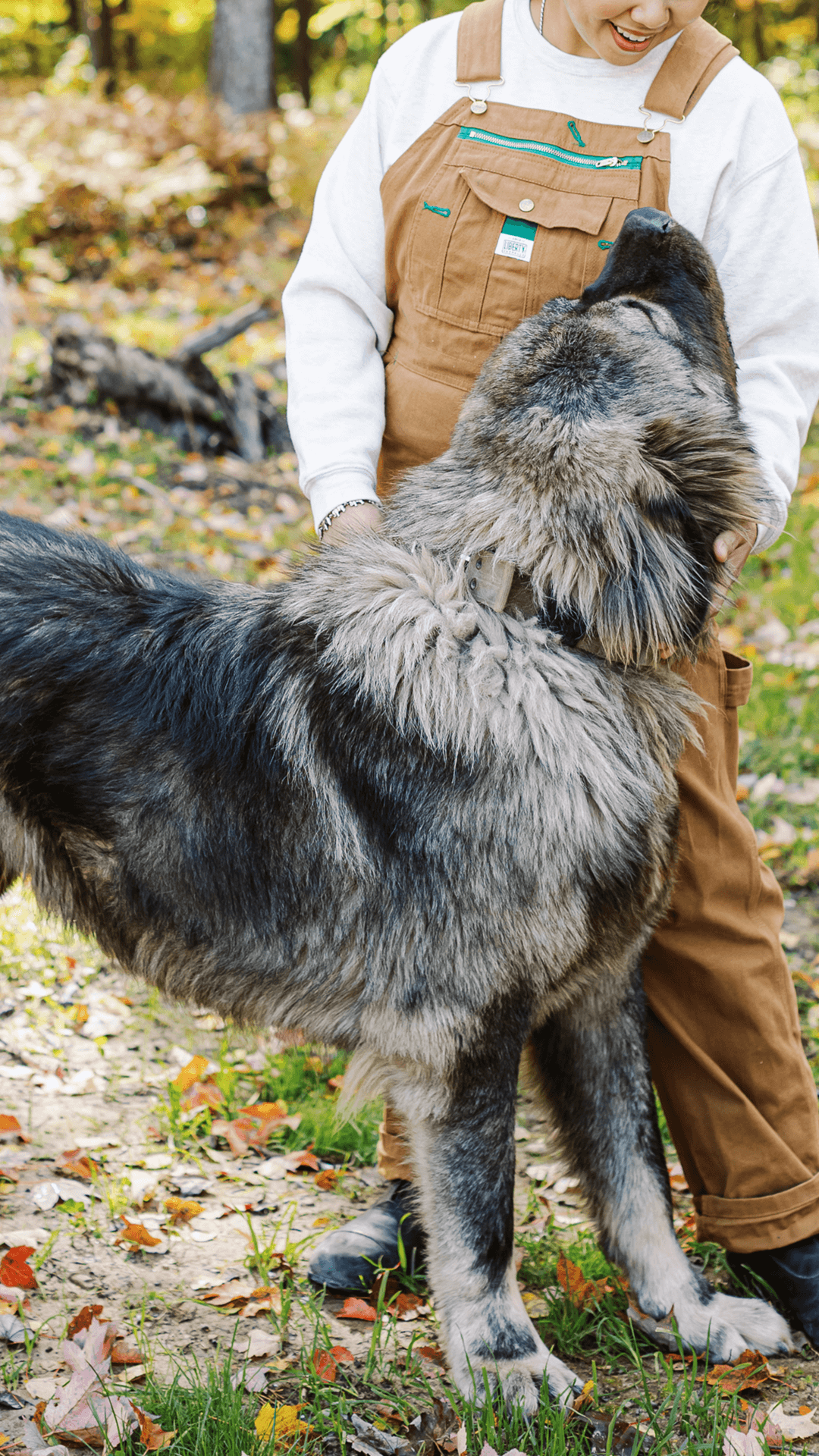
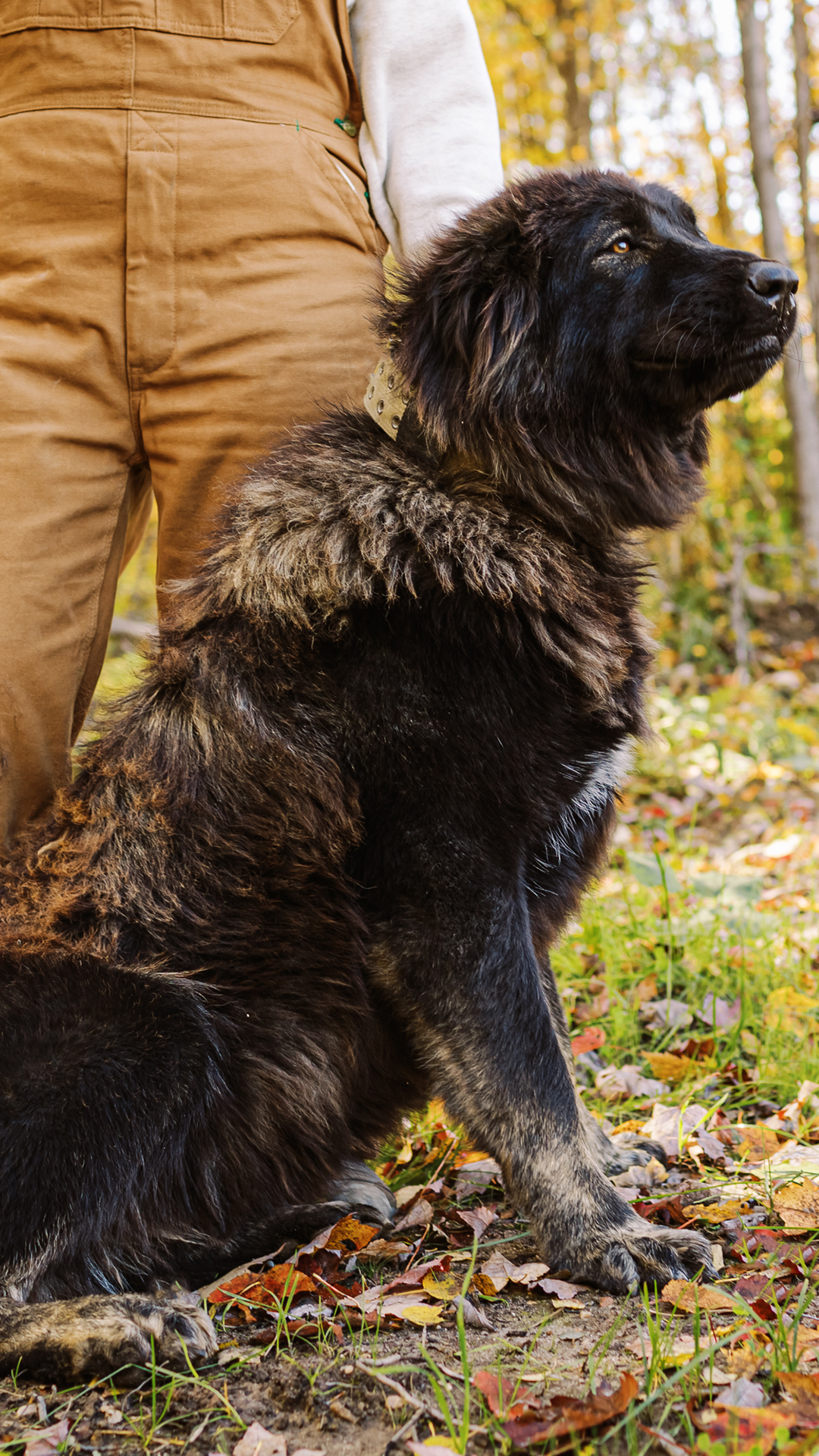
Working guardianStrength is only part of the breed.
Breed overview
Not a giant pet with a guard-dog label.
The Caucasian Shepherd Dog is a large, independent guardian breed developed to make decisions without constant human direction. Its working heritage still shapes how the breed thinks, bonds and responds to unfamiliar people or situations.
What is a Caucasian Shepherd Dog?
The Caucasian Shepherd Dog, also called the Caucasian Ovcharka, is an ancient livestock guardian breed associated with the Caucasus region. The dogs were valued for protecting flocks, homes and property in demanding environments where confidence, endurance and independent decision-making mattered.
That history helps explain the modern breed. A Caucasian Shepherd may be deeply affectionate with its trusted family while remaining naturally suspicious of unfamiliar people and highly aware of changes around its territory.
For prospective owners, the most important thing to understand is that size alone does not define this breed. Its independence, protective instinct and judgment are much more consequential than its appearance.
Temperament
Loyalty with judgment.
The breed was developed to notice what changed, decide what mattered and act without waiting for constant instruction.
Deeply bonded
Caucasian Shepherds often form strong bonds with the people and animals they accept as part of their group.
Naturally watchful
Suspicion of unfamiliar people or activity is not unusual in a breed selected for territorial guardian work.
Independent
They are intelligent dogs, but intelligence does not mean eager obedience. They often evaluate situations rather than simply repeating commands.
Serious about territory
Management, boundaries and early socialization matter because guardian instinct tends to strengthen as the dog matures.
Size & development
They grow fast. They mature slowly.
Caucasian Shepherds become physically impressive early, but mental and physical maturity continue well beyond the puppy stage. Owners should plan for an adult guardian, not make decisions based only on an eight-week-old puppy.
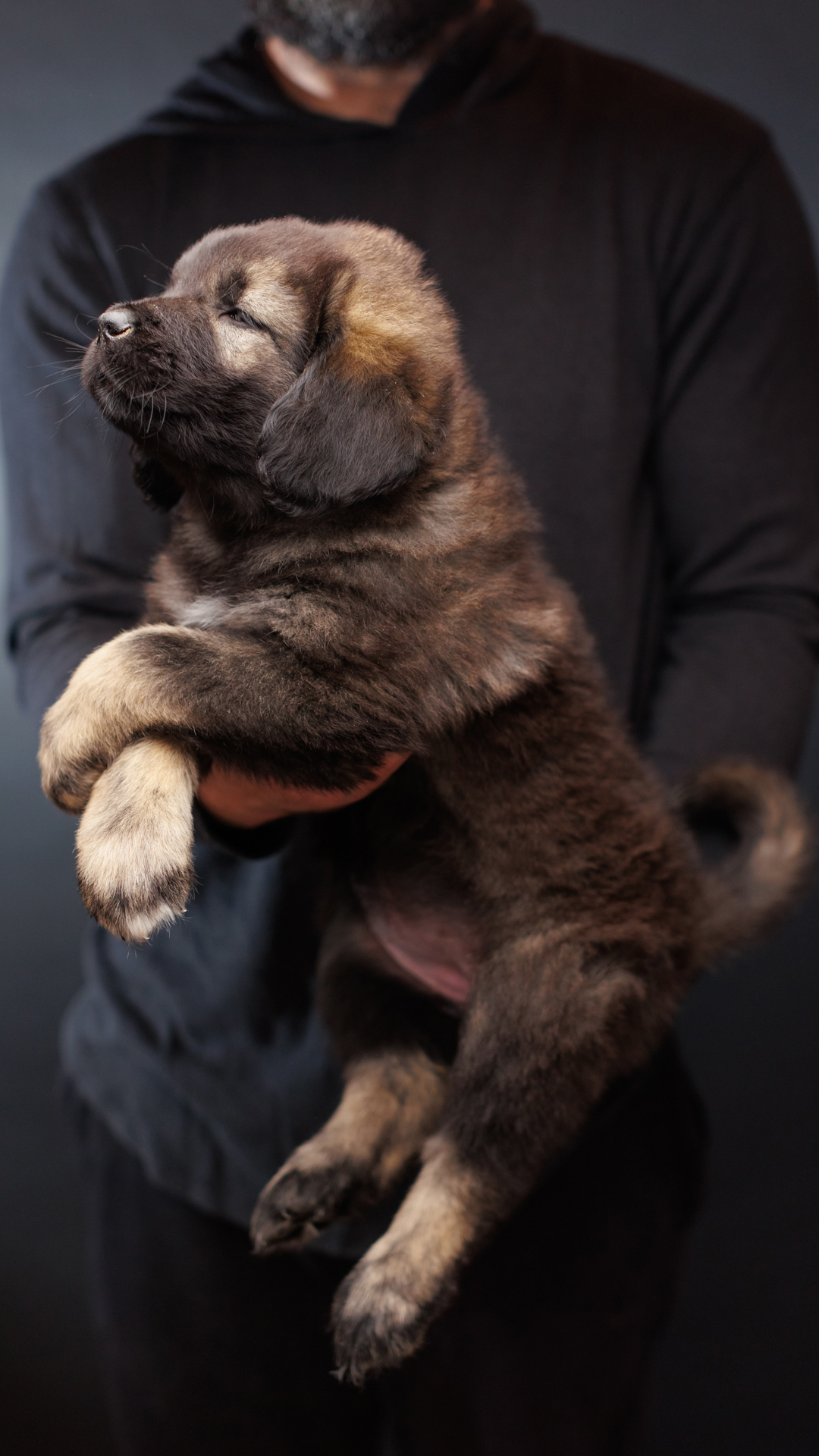
PuppyFoundation
Handling, socialization, boundaries and controlled exposure begin before the dog looks intimidating.
AdolescentConfidence grows
Size, independence and territorial awareness can increase quickly during adolescence.
Mature adultGuardian judgment
Adults continue to fill out physically and become more settled in how they evaluate their environment.
About weight charts:
There is substantial variation between sex, bloodlines, structure and body condition. A healthy dog should not be judged by chasing the largest possible number on a scale.
Coat, structure & variation
Double coatDense, weather-resistant protection with seasonal shedding.
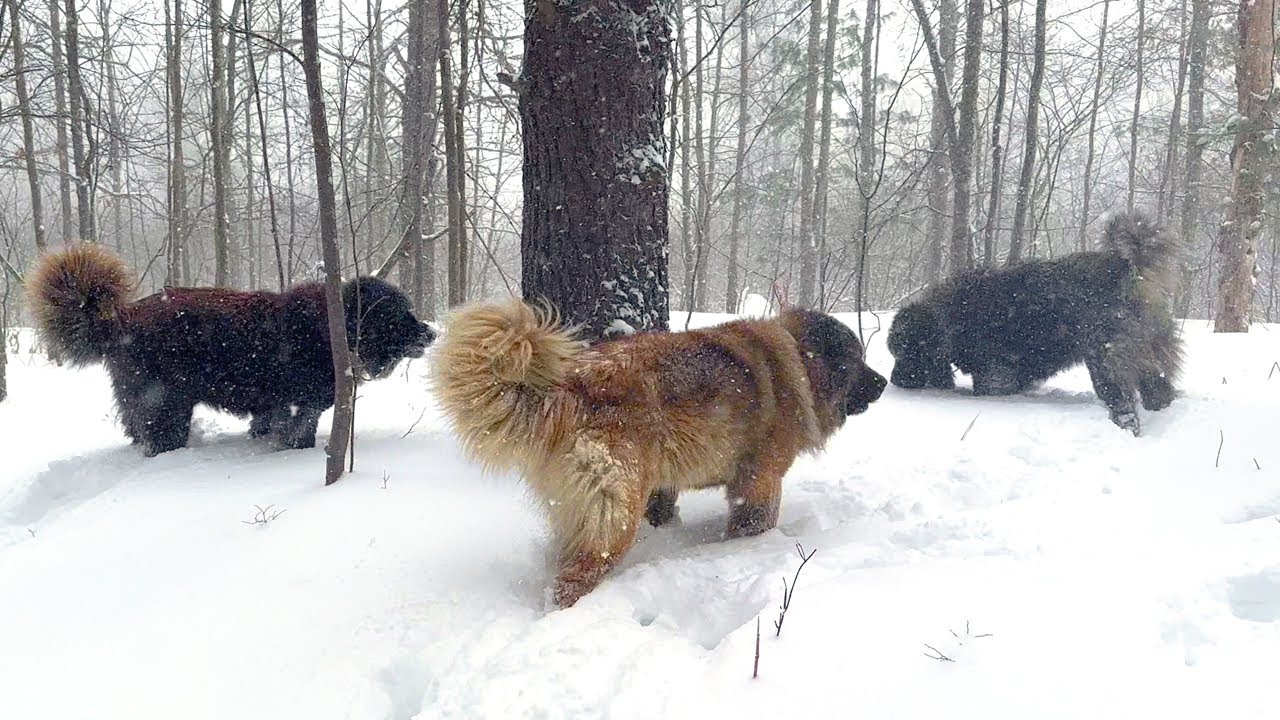
Coat lengthShorter, intermediate and longer-coated dogs are all encountered.
ColorGrey, fawn, brindle, white and pied patterns occur within the breed.
Sex differencesMales are generally heavier and more massive; females are often lighter and more athletic.
See real examples in the Breed Gallery →
One breed. More variation than many people expect.
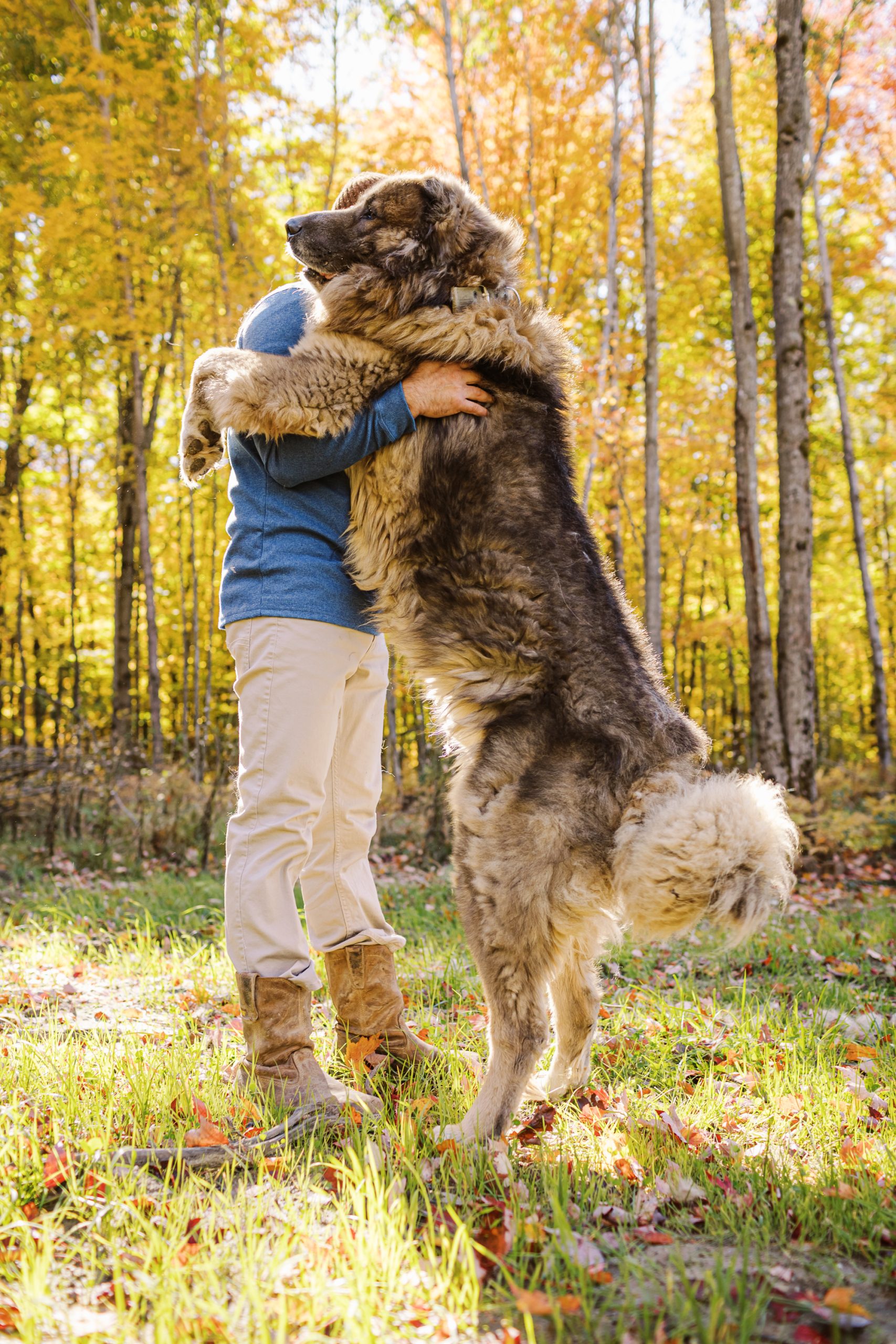
Caucasian Shepherds can vary considerably in coat length, build and markings. The breed developed across a broad region, and working conditions helped shape different appearances while preserving the traits needed in a serious guardian.
Training & socialization
Explore the complete training & socialization guide →
You are building judgment, not programming a robot.
Training a Caucasian Shepherd requires consistency, clear boundaries and realistic expectations. The goal is not to erase guardian instinct. It is to help the dog understand your expectations and develop appropriate responses to the environment in which it will live.
Start earlyHandling, leash work, household expectations and exposure should begin before size becomes difficult to manage.
Be consistentRules that change from day to day create confusion in an independent dog.
Socialization is not indiscriminate friendlinessThe goal is a dog that can evaluate normal life without treating every unfamiliar situation as a threat.
Respect the breedForce and confrontation can damage trust. Leadership should be calm, predictable and credible.
Working roles
A guardian needs something meaningful to guard.
Historically, the breed's job was protection. Modern Caucasian Shepherds can still excel where their natural awareness and territorial instincts have a legitimate purpose.
Livestock
Livestock guardian
On appropriate farms and homesteads, the breed's awareness and territorial instincts can support livestock protection.
Property
Property guardian
Many Caucasian Shepherds naturally monitor boundaries, unusual activity and changes in their environment.
Family
Family protector
Dogs that are responsibly raised and managed can be deeply affectionate with their trusted family while remaining serious guardians.
Family life
Can a Caucasian Shepherd live with children and other animals?
It can, but the answer should never be reduced to a simple yes or no. Individual temperament, early experiences, supervision, household management and the behavior of the people and animals around the dog all matter.
At Brotherbear Acres, our dogs live around family and farm life. That experience informs our belief that exposure should be purposeful and that adults must remain responsible for managing interactions, especially with a very large guardian breed.
Health, coat & daily care
Large guardian. Long-term responsibility.
Good ownership means managing the entire dog: weight, joints, coat, exercise, nutrition, veterinary care, fencing, training and mental well-being.
Protect growing joints.
Large dogs benefit from appropriate body condition, sensible exercise and veterinary guidance through growth and adulthood.
Expect seasonal shedding.
The dense double coat requires routine brushing, with more work during seasonal coat changes.
Purpose over endless repetition.
These are not dogs that need constant high-impact exercise. Space to move, patrol, explore and engage appropriately can matter more than repetitive workouts.
Built for weather.
The coat provides substantial weather protection, but owners still need shade, water, shelter and common-sense management in extreme conditions.
See the breed in motion
The breed, shown, not just described.
Photos can show structure. Video shows movement, awareness, family interaction and how these dogs behave in a real environment.
Breed GalleryPhotos & videos of real Brotherbear Acres dogsExplore →
Real footage
Working guardians. Puppies. Family life.
Our gallery is the visual companion to this guide and uses Brotherbear Acres dogs rather than generic breed imagery.
Origins & history
Why the breed thinks the way it does.
The Caucasian Shepherd's reputation makes more sense when viewed through the environment and work that shaped it.
The breed is associated with the Caucasus region between Europe and Asia, where guardian dogs worked alongside shepherds and communities in difficult terrain and weather. Their usefulness depended on resilience, territorial awareness, courage and the ability to make decisions without constant supervision.
As the dogs spread through parts of Eastern Europe and the former Soviet Union, they were also used for property, institutional and border-guarding roles. Regional selection contributed to variation in coat, size and appearance while the core guardian character remained central.
Ancient origins in the Caucasus Mountains
The rugged geography of the Caucasus helped preserve populations of large guardian dogs selected to defend livestock, homes and territory. Harsh winters, remote grazing areas and predator pressure favored dogs with dense coats, endurance, confidence and independent judgment.
Caucasian Shepherd vs. Caucasian Ovcharka
The names generally refer to the same breed. “Ovcharka” is a Russian term used for shepherd or sheepdog, while “Caucasian Shepherd Dog” is common in English-language usage. “Caucasian Mountain Dog” is another name people may encounter.
Working roles beyond livestock
In addition to flock protection, Caucasian Shepherds have been used historically for guarding property, compounds and borders. Those roles reinforced selection for territorial awareness, deterrence and independence.
Regional variation
Dogs from different areas developed variation in coat, build and appearance according to climate, terrain and local preferences. That helps explain why modern Caucasian Shepherds do not all look identical.
Go deeper
Continue beyond the breed overview.
What does it actually take to raise a Caucasian Shepherd well? Training, health, nutrition and grooming matter more than most owners expect.
Behavior
Training & Socialization
Independent thinking, boundaries, family versus farm life and responsible socialization.
Read guide → CareHealth & Longevity
Large-breed health considerations, body condition, joints and preventive veterinary care.
Read guide → CareNutrition & Growth
Feeding a giant guardian through puppy development, adulthood and changing activity levels.
Read guide → CoatGrooming & Coat Care
Double-coat maintenance, seasonal shedding and practical grooming expectations.
Read guide → Quick answersCaucasian Shepherd FAQ
Children, exercise, training, grooming, lifespan and other common ownership questions.
Open FAQ → Visual evidenceBreed Gallery
Portrait and landscape photography plus real footage of Brotherbear Acres dogs.
See the dogs →
Is this breed right for you?
The most important question comes before the puppy.
A Caucasian Shepherd can be an extraordinary dog in the right environment and a poor fit in the wrong one. Prospective owners should think seriously about space, fencing, visitors, children, other animals, experience, local rules, training expectations and the responsibility of managing a powerful guardian for its entire life.