
Caucasian Shepherds are independent, confident guardian dogs known for strong loyalty to their household and territory. They can be deeply affectionate with their own family while remaining reserved or suspicious around unfamiliar people. Temperament varies by genetics, raising and individual dog, but prospective owners should expect a serious guardian rather than an indiscriminately social breed.
Caucasian Shepherd questions · answered
Before You Live
Before You Live
With a Guardian.
Straightforward answers about temperament, family life, training, size, grooming, exercise and what ownership of a Caucasian Shepherd actually requires.
20ownership questions
10–12typical lifespan in years
LGDguardian heritage
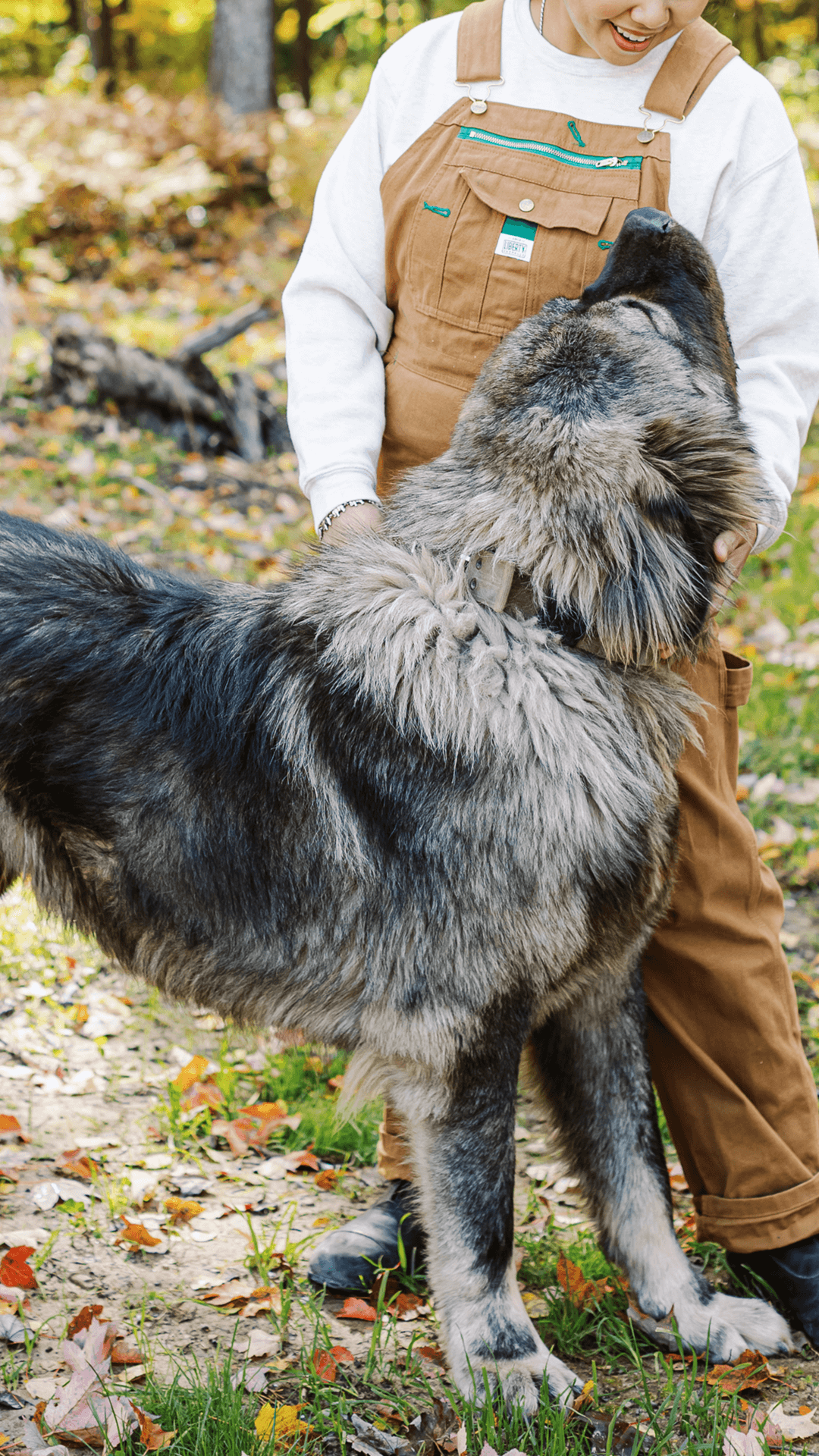
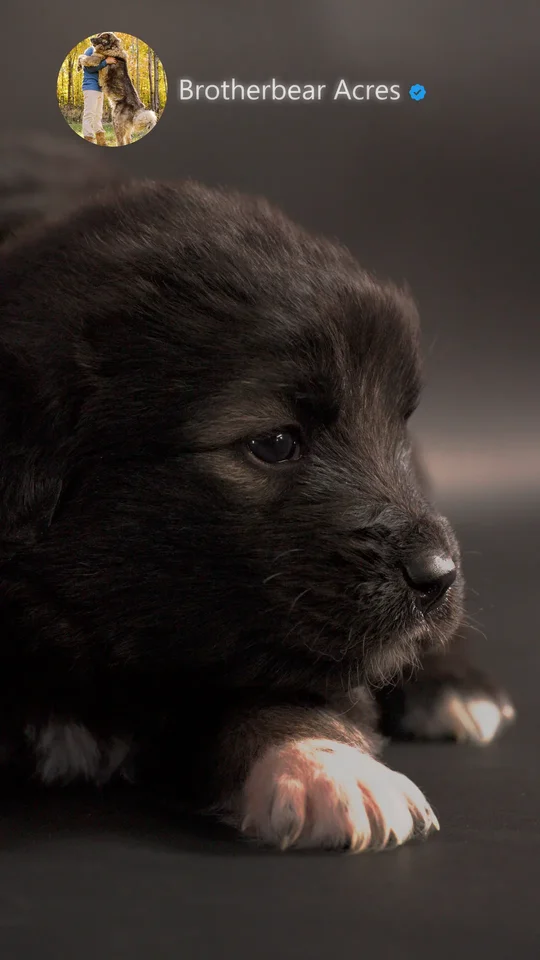
REAL DOGSREAL
EXPERIENCE
EXPERIENCE
Brotherbear Acres breed guideFirst-hand Caucasian Shepherd experience since 2015Updated August 12, 2026
The important question
Is this breed right for your life?
A Caucasian Shepherd is not simply a very large companion dog. The breed was developed to guard livestock, property and territory, and that history still matters. The best match is an owner prepared for an intelligent, powerful and independent dog whose natural instincts require thoughtful management.
Read the complete breed guide →Frequently asked
20 questions worth answering.
The first four answers stay open so the most important ownership information is immediately visible. Search or filter the complete guide below.
20 questions
“Aggressive” is too broad to describe the breed well. Caucasian Shepherds were developed to respond to perceived threats, so territorial and defensive behavior can be much stronger than in typical companion breeds. A stable dog should not be encouraged to react indiscriminately. Genetics, early raising, socialization, management and the handler’s decisions all matter.
Caucasian Shepherds can form very strong bonds with children in their household when properly raised and socialized. Their size, strength and protective instincts still require adult supervision, clear boundaries and careful management, particularly around visiting children, unfamiliar adults and other animals.
They are intelligent, but intelligence does not mean automatic obedience. Caucasian Shepherds were developed to make guardian decisions independently, so training works best when expectations are clear, consistent and meaningful. Early socialization, handling, leash skills and household boundaries are especially important.
The Caucasian Shepherd is a very large, powerful breed. Adult size varies considerably with sex, genetics, bloodline, condition and regional type. Rather than choosing a puppy only for maximum projected weight, owners should prioritize sound structure, appropriate body condition, temperament and suitability for the dog’s intended role.
Caucasian Shepherds benefit from regular daily activity, room to move and purposeful time outdoors. Walks, secure-property exploration and appropriate play can all contribute to conditioning. Exercise should match the dog’s age, health and stage of physical development; more mileage is not automatically better for a giant guardian.
Caucasian Shepherds have a dense double coat and do shed. Seasonal coat changes can be substantial, particularly when the undercoat is released. Regular brushing helps remove loose coat and gives the owner a chance to inspect the skin beneath the dense fur.
Regular brushing is useful throughout the year, with more frequent coat work during heavy seasonal shedding. Coat length and density differ among dogs, so there is no single schedule that fits every Caucasian Shepherd. Nails, ears, skin and body condition should also be checked routinely.
A commonly cited lifespan is approximately 10 to 12 years, although individual longevity varies with genetics, overall health, body condition, veterinary care, environment and other factors.
They can live successfully with other dogs, particularly when relationships are established thoughtfully, but compatibility is individual. Sex, age, temperament, resource guarding, territory and maturity can all change the dynamic. Owners should not assume that early puppy friendliness guarantees unrestricted adult-dog compatibility.
Many Caucasian Shepherds live around other household animals or livestock, especially when introduced and managed appropriately from a young age. Individual prey drive and behavior vary, so introductions should be supervised and responsibility expanded gradually rather than assumed.
Yes, a Caucasian Shepherd can spend time indoors and be part of household life, but the larger question is whether the entire environment suits the dog. Space, secure outdoor access, fencing, visitor management, exercise and the owner’s ability to handle a giant guardian matter more than whether the dog crosses the front door.
There is no magic acreage requirement, but this is a giant guardian breed that benefits from secure room to move and clear boundaries. Property layout, fencing, neighboring homes, livestock, visitors and the owner’s management plan are more informative than acreage alone.
Generally, this is not the breed we would recommend someone choose simply because they want their first large dog. Their physical power, territorial instincts and independent decision-making can be demanding. A prospective owner should have a realistic management plan and be willing to learn from experienced guardian-dog professionals.
Learning begins as soon as the puppy begins experiencing its environment. Age-appropriate handling, surfaces, sounds, people, boundaries and routines can start early, followed by increasingly structured training as the puppy develops. Socialization should continue through adolescence rather than being treated as a short puppy-only phase.
Because guardian breeds can make independent decisions and may respond strongly to territory, wildlife or unfamiliar dogs, off-leash freedom should never be assumed. Reliability, environment, local rules and risk all matter. Securely fenced areas are the safer default when control cannot be guaranteed.
Fencing should be secure, appropriately tall and designed for the individual property and dog. Gates and weak points matter just as much as fence height. A guardian should not be allowed to decide that neighboring land, a road or a delivery area is part of its territory.
Alert barking is normal guardian behavior, and some Caucasian Shepherds are especially vocal when they detect unfamiliar activity. Location and management therefore matter. Owners should expect to teach routines around normal nighttime sounds, neighbors, visitors and recurring activity rather than expecting a silent livestock guardian.
Livestock and property guarding are central to the breed’s history, but simply placing a puppy with animals does not guarantee a finished livestock guardian. Genetics, early exposure, supervision, maturity, fencing and the livestock involved all influence success. Young dogs need guidance while judgment develops.
A good match values the breed’s independence rather than fighting it, has a realistic plan for secure containment and visitors, and understands that an impressive appearance comes with serious responsibility. If you primarily want an easygoing, highly social dog that welcomes every stranger and follows commands mechanically, another breed may fit better.
No exact match.Try a broader term, or browse all questions.
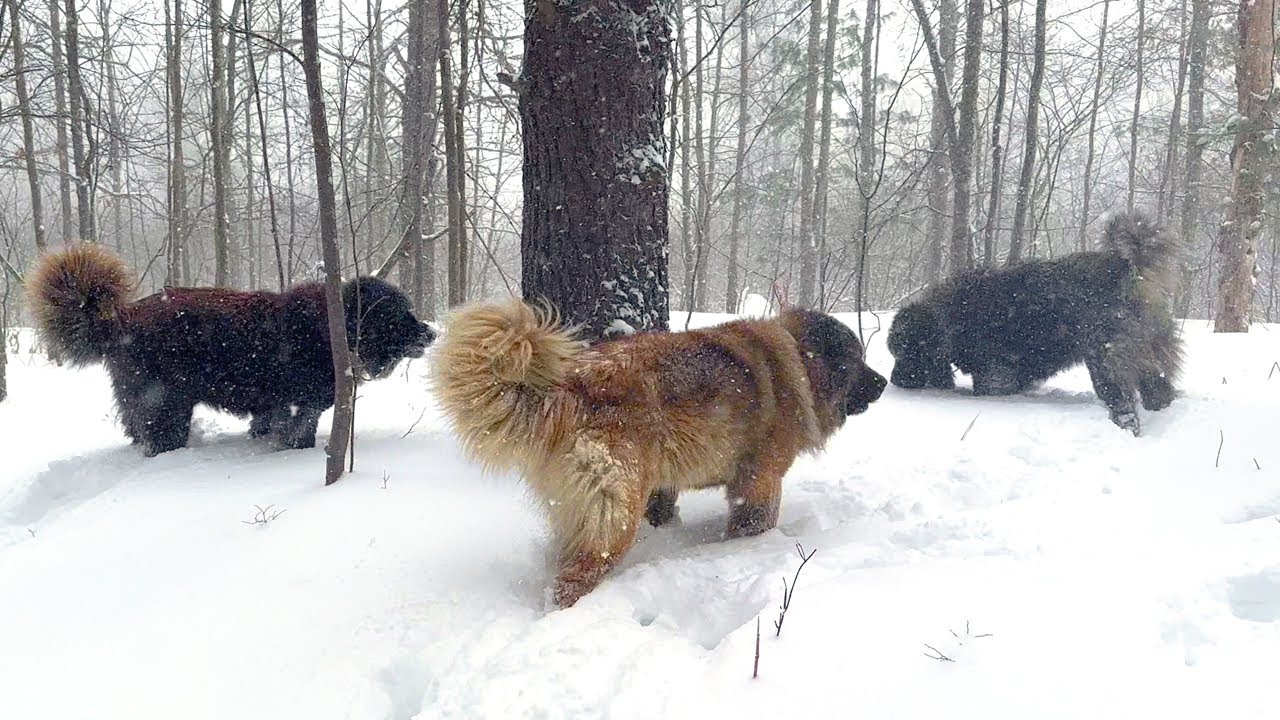
Beyond the FAQUnderstand the instinct
Understand the instinct
behind the answer.
Questions about training, strangers, children and property all lead back to the same thing: this is an independent guardian breed. Understanding why the dog behaves as it does is more useful than memorizing a list of rules.
Training & SocializationFrom our farm
What living with the breed changes.
Brotherbear Acres began raising Caucasian Ovcharkas in 2015 and established our Northern Michigan farm in 2020. Our answers are shaped by living with the breed around family, livestock, woods, weather and the everyday routines of a working property.
That experience has reinforced four things for us: guardian instinct is real, early exposure matters, management remains important after puppyhood, and the right placement matters more than simply wanting the biggest or most imposing dog.
How Brotherbear Acres raises Caucasian Shepherds →Instinct needs context.
A guardian still needs to learn what belongs to normal life on its property.
Exposure starts early.
People, animals, sounds and routines become part of the puppy’s understanding of the world.
Maturity changes the dog.
Puppy behavior is not a complete preview of an adult guardian’s territorial awareness.
Placement matters.
The household, property, expectations and individual puppy should make sense together.
Go deeper than a quick answer.
01 · BREED
The Complete Breed Guide
Origins, temperament, guardian instinct, structure, family life and ownership.
Explore → 02 · TRAININGTraining & Socialization
Boundaries, independent judgment, family vs. farm life and development stages.
Learn → 03 · COMPARECompare Guardian Breeds
See how the Caucasian Shepherd differs from other commonly compared breeds.
Compare → 04 · VISUALPhotos & Working Footage
See adult guardians, puppies and real footage from Brotherbear Acres.
Watch →Considering a puppy?Research first.
Research first.
Then find the right fit.
If the breed still sounds right for your household, property and expectations, explore current and planned Brotherbear Acres litters.