Steady beats extreme.
Faster growth is not automatically healthier growth.

A Caucasian Shepherd puppy is already genetically programmed to become a giant dog. Feeding should support steady development and healthy body condition, not chase the largest possible number on a scale.

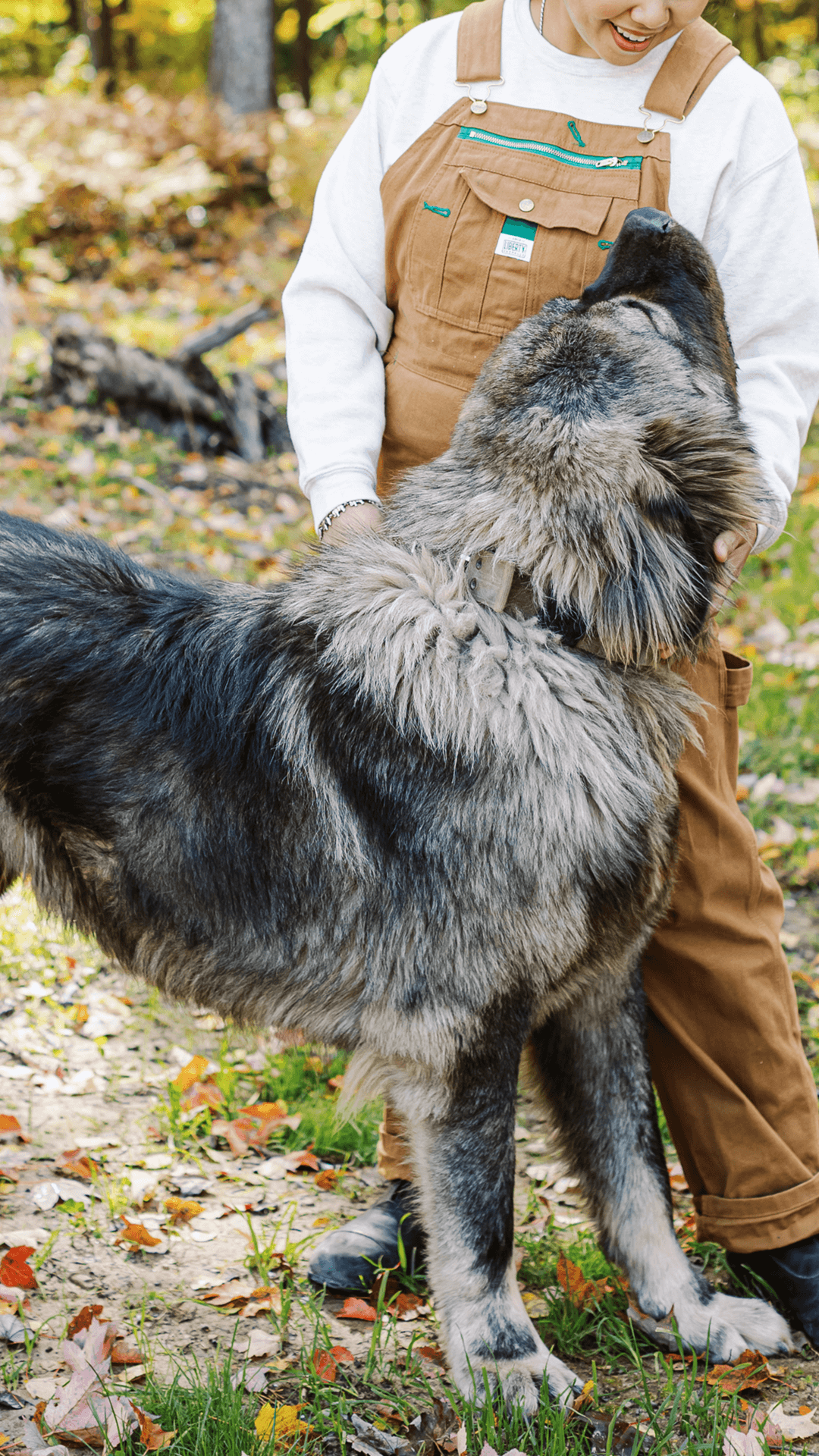
Large-breed puppies require enough nutrition to grow, but excessive calories and unnecessary supplementation can work against the goal of controlled, structurally sound development. Individual feeding decisions should be made with body condition, growth pattern and veterinary guidance in mind.
Faster growth is not automatically healthier growth.
Age, body condition, activity, metabolism and food energy density all affect the amount needed.
Choose a complete diet appropriate for the dog's life stage rather than assembling nutrition from isolated trends or supplements.
Health conditions, allergies, gastrointestinal problems and therapeutic diets belong with a veterinarian.
Bones, joints, muscle and connective tissue are developing while the puppy gains size rapidly. Body condition and sensible growth deserve more attention than internet weight competitions.
Look at growth over time rather than reacting to a single weight measurement.
Dense coat can hide body condition, so hands-on checks are especially useful.
The amount appropriate at one stage may be too much or too little several weeks later.

Use your hands as well as your eyes. Learn the individual dog's normal rib cover, waist, muscle and overall condition. Weight charts can provide context, but they should not replace direct assessment of the dog.
If growth, appetite, stool, energy or body condition changes unexpectedly, talk with your veterinarian rather than trying to correct everything by adding or removing supplements on your own.
There are multiple ways to feed dogs successfully. The key is that the overall diet meets nutritional needs, is appropriate for life stage and can be adjusted based on the individual dog's condition and response.
A growing giant-breed puppy should not depend on random additions to fill nutritional gaps.
Puppy, adult, reproductive and senior needs are not identical.
Frequent abrupt diet changes can make it harder to know what is actually working for the dog.
Adding minerals, vitamins or other products without a reason can disrupt an otherwise balanced diet.
An adult working outdoors in cold weather may have very different energy needs from an adult living primarily as a family property guardian. Age, season, activity and reproductive status can all change calorie needs.
Nutrition discussions around giant breeds often become dominated by maximum size, miracle supplements and absolute rules. We prefer a simpler framework: complete nutrition, sensible growth, appropriate body condition and professional guidance when needed.
No. Genetics determine the dog's growth potential. The goal is healthy development, not forced acceleration.
Do not add minerals to a complete growing-puppy diet without professional guidance. Balance matters.
Start with the food's guidance, then adjust based on age, condition, growth and veterinary input rather than treating the package as a permanent prescription.
There is no single universally best brand or method for every dog. The best plan is nutritionally appropriate, sustainable and working well for the individual animal.
Searches for Caucasian Shepherd food, puppy feeding, growth and weight often come from the same concern: how to grow a large dog well without trying to make it as heavy as possible as fast as possible.
Choose a nutritionally complete approach appropriate for growth and adjust intake according to body condition, development and veterinary guidance.
Healthy adult weight is individual. Sex, frame, lineage, activity and body condition matter more than chasing a single impressive number from the internet.
Diet changes should be deliberate, especially during growth. If a puppy has digestive, orthopedic or medical concerns, use your veterinarian rather than generic feeding charts as the deciding authority.