
Growth and structural soundness deserve particular attention.
Caucasian Shepherd health & longevity
Build the Dog
Build the Dog
for the Long Run.
A giant guardian's health is shaped by genetics, growth, body condition, movement, nutrition, veterinary care and the environment in which the dog lives.
Health overview
Health is more than a list of diseases.
For a large guardian breed, everyday management has a long horizon. Responsible ownership includes maintaining appropriate body condition, protecting growing joints, providing sensible exercise, monitoring changes and working with a veterinarian who understands large-breed development.
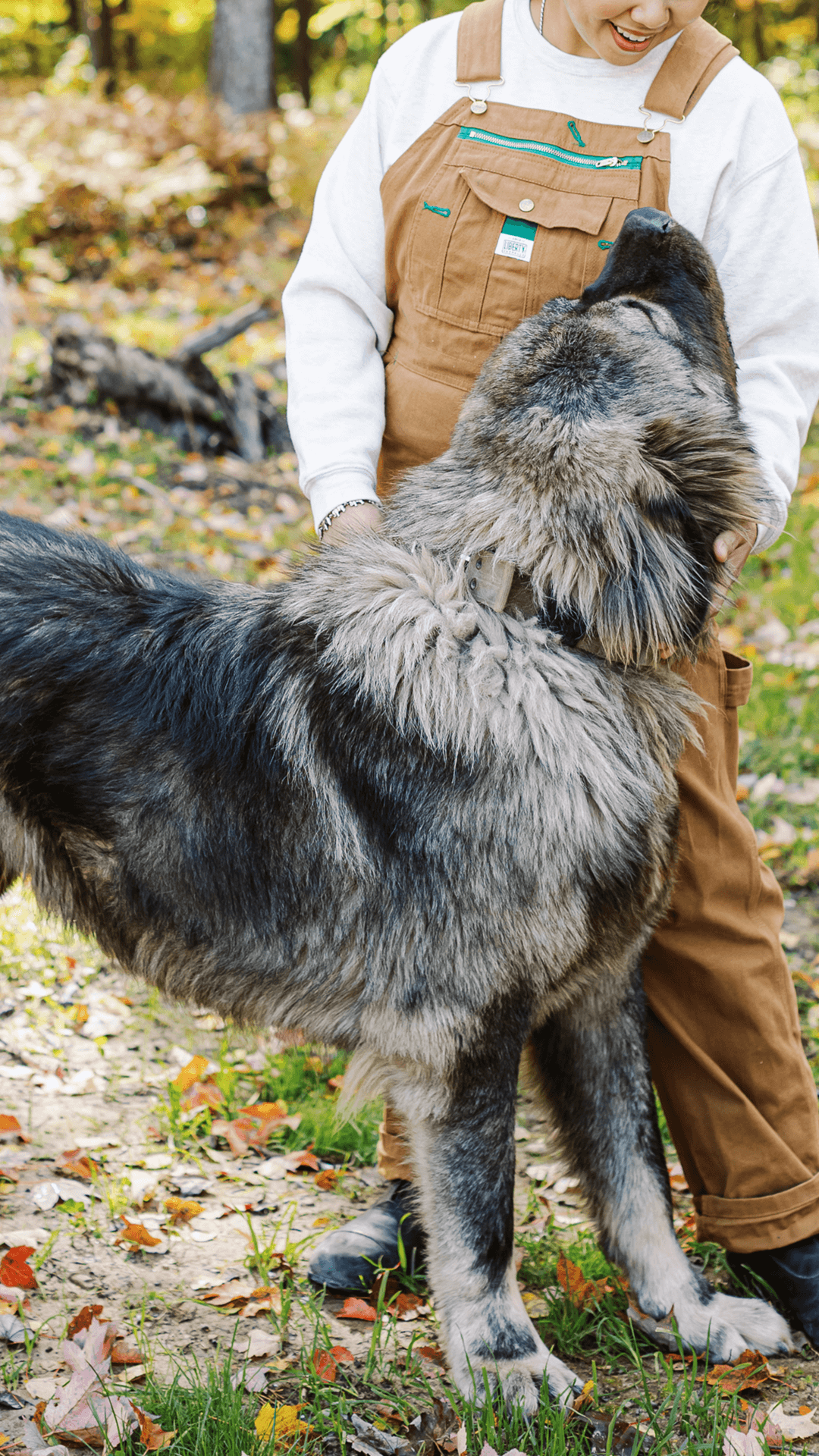
Routine grooming makes skin and body checks easier.
Conditioning should suit age, structure and health.
Individual dogs vary substantially.
Puppy growth
Fast growth does not mean faster is better.
A Caucasian Shepherd puppy can become physically impressive long before the skeleton, connective tissue and judgment of the adult dog are finished developing.
More weight is not automatically more breed quality. Excess body mass increases the mechanical load a developing dog carries.
Young dogs need movement and experience, but repeated high-impact work should not be confused with healthy conditioning.
Appetite, gait, energy, coat, stool, body condition and behavior can all provide useful clues when something changes.
Joints & structure
Movement should stay functional, not just impressive.
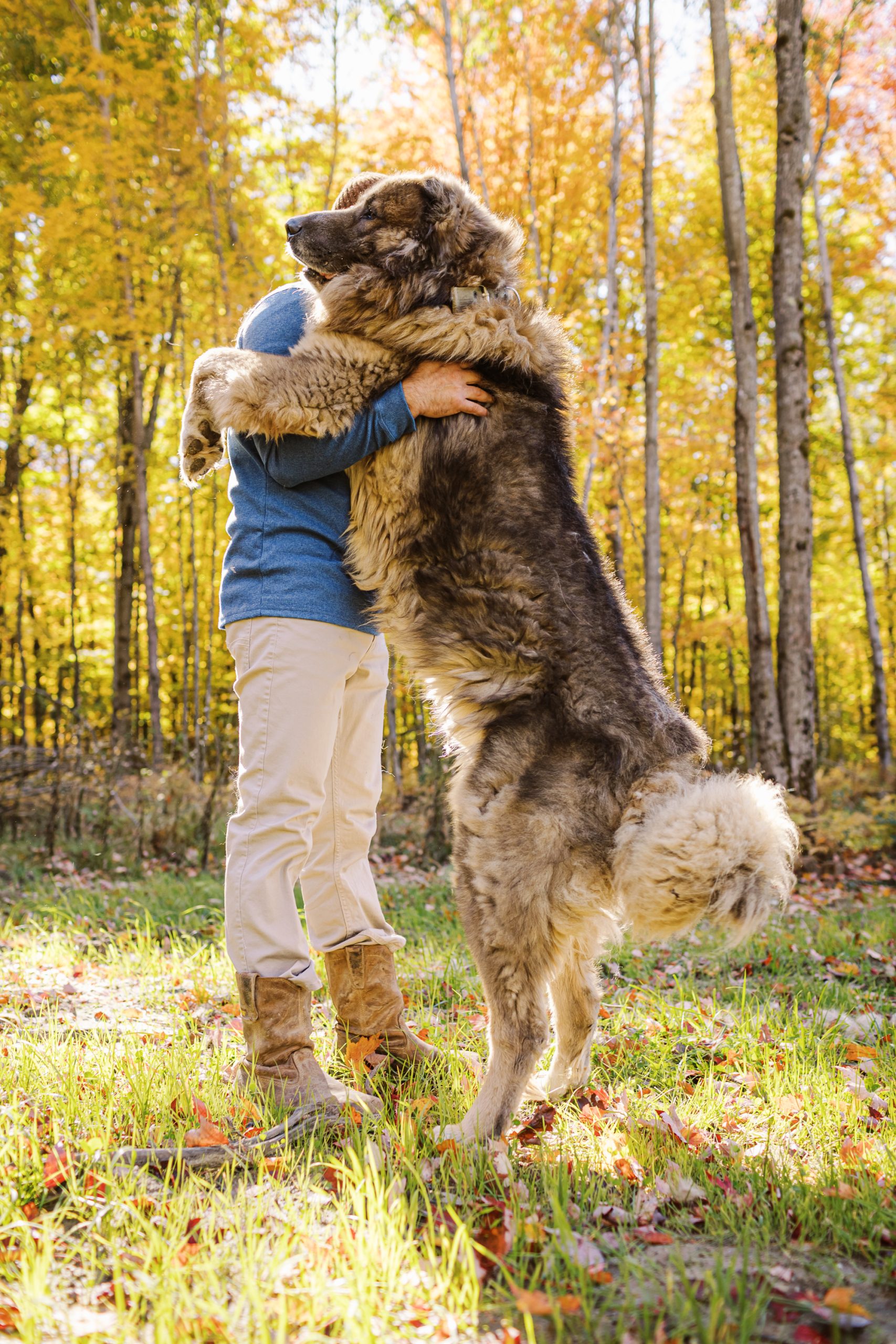
Large dogs place significant loads on hips, elbows, feet and connective tissue. Genetics are part of the picture, but so are body condition, surfaces, activity, injury prevention and how the puppy is managed through growth.
Owners should bring gait changes, persistent stiffness, pain, reluctance to move or other concerns to a veterinarian rather than attempting to diagnose orthopedic problems from appearance alone.
Our rule of thumbProtect function first. The goal is a capable adult guardian, not the heaviest puppy on a growth chart.
Body condition
The scale is only one measurement.
Online discussions about Caucasian Shepherd size often reward extreme numbers. Healthy body condition is more useful than chasing maximum weight.
Assess proportion.
Coat can hide the body. Owners should learn how the dog's underlying structure feels, not judge condition only from photographs.
Use your hands.
Dense coat makes hands-on checks particularly valuable for noticing changes in ribs, muscle, skin, lumps or tenderness.
Watch change over time.
A sudden change in weight, appetite, movement or energy is often more meaningful than a single number.
Routine ownership
Small checks become long-term habits.
This is not a substitute for veterinary care. It is a practical ownership routine for noticing changes early and keeping a heavily coated, powerful dog manageable for normal care.
Hands-on body checks
Use grooming and handling time to notice skin changes, tenderness, swelling or condition changes hidden beneath the coat.
Nails, ears & teeth
Teach cooperative handling early so routine maintenance does not become a wrestling match with a mature guardian.
Movement
Know what your dog's normal gait and willingness to move look like so changes are easier to recognize.
Veterinary relationship
Establish care before an emergency and discuss vaccination, parasite prevention, reproductive health and screening based on the individual dog and region.
Caucasian Shepherd lifespan
10–12
years is a commonly cited rangeA range is not a promise.
Longevity varies by genetics, disease, accident risk, body condition, environment, veterinary care and many other factors. A number on a breed page should never be treated as an expiration date or a guarantee.
The practical goal is to support mobility, health and quality of life through every stage rather than optimizing for a statistic.
When something changes
Know your normal.
Persistent pain, difficulty breathing, collapse, significant abdominal swelling, repeated vomiting, inability to urinate, serious trauma or sudden neurologic changes can require urgent veterinary attention. For non-emergency concerns, changes that persist or worsen still deserve professional evaluation.
This guide provides general breed ownership information and does not diagnose or treat medical conditions.