
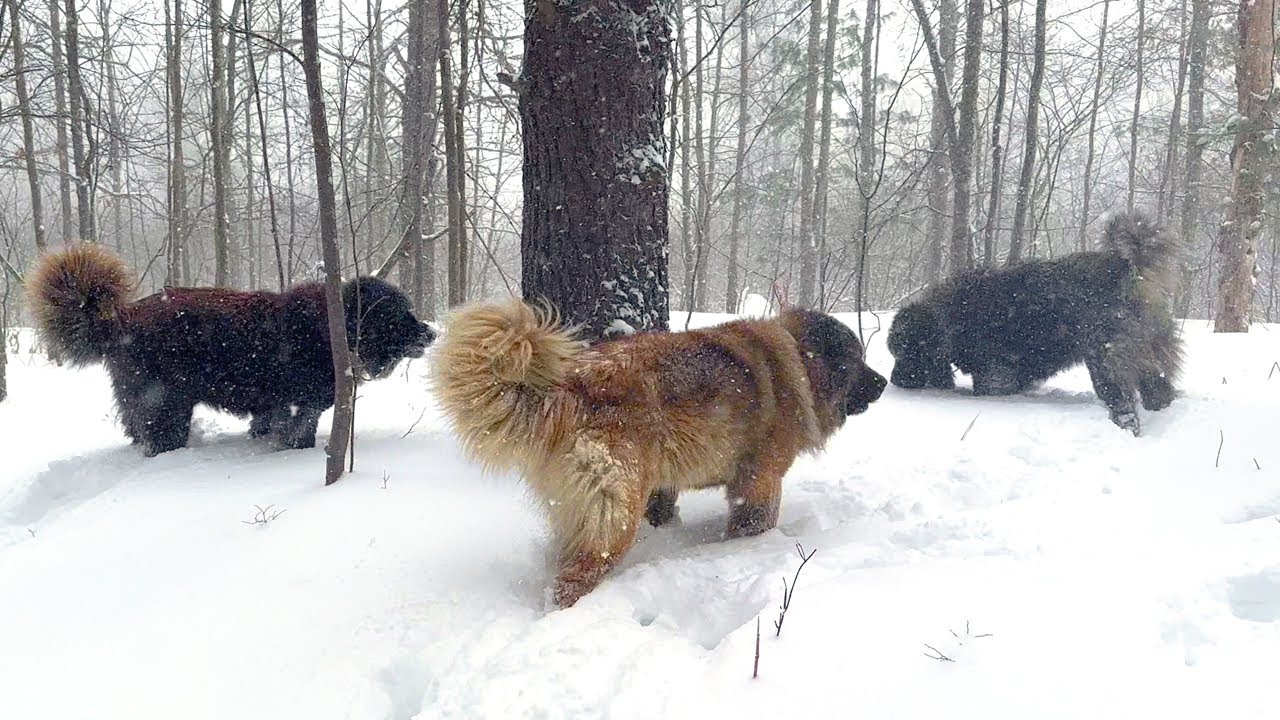
The outer coat helps shed moisture and protects the dog from environmental exposure.
Caucasian Shepherd grooming & coat care
Built for Weather.
Built for Weather.
Maintained by Hand.
The Caucasian Shepherd's dense double coat is functional protection. Grooming is less about styling and more about keeping the coat, skin, nails and body easy to inspect and maintain through every season.
The double coat
The coat is part of the dog's working equipment.
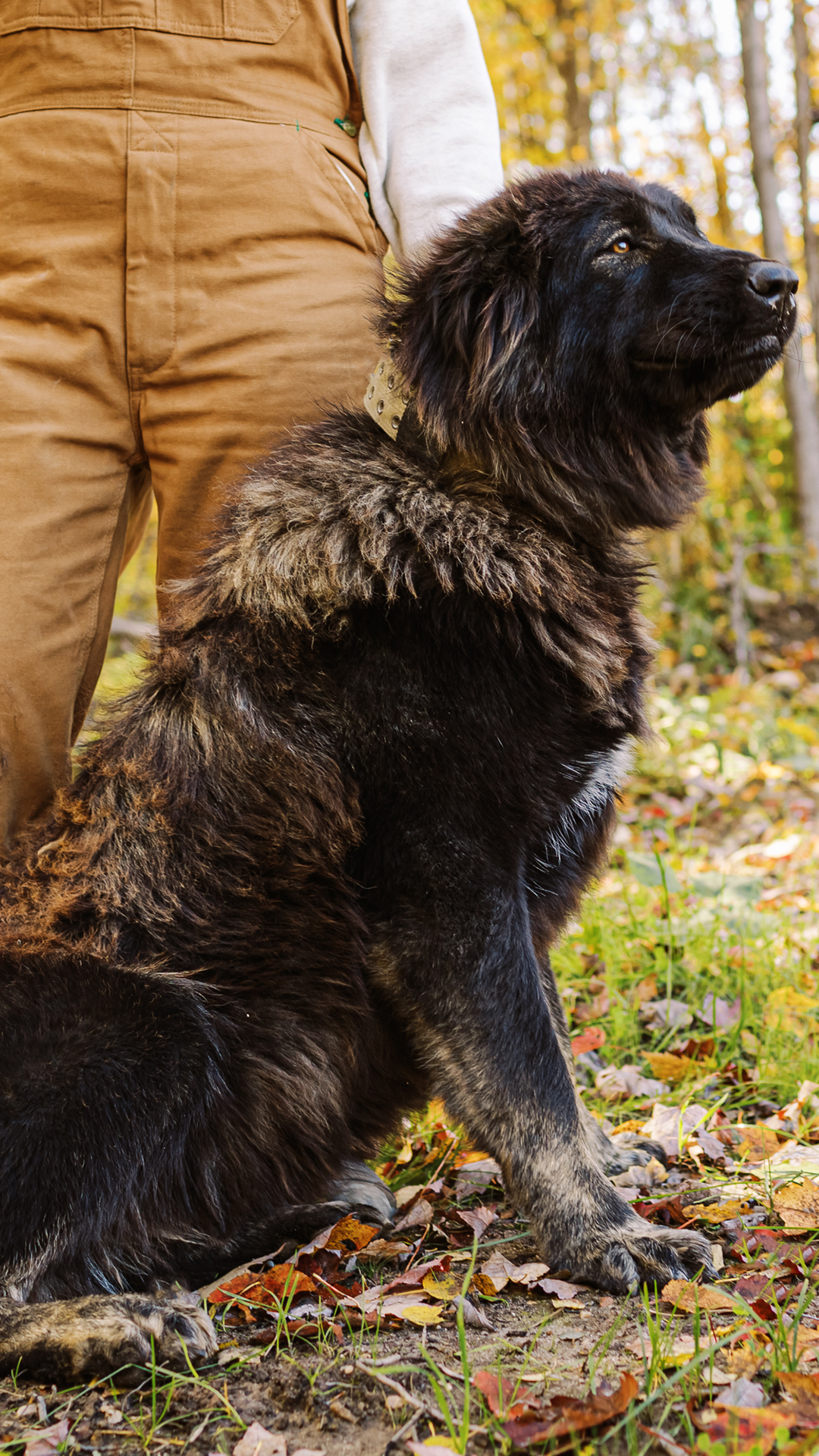
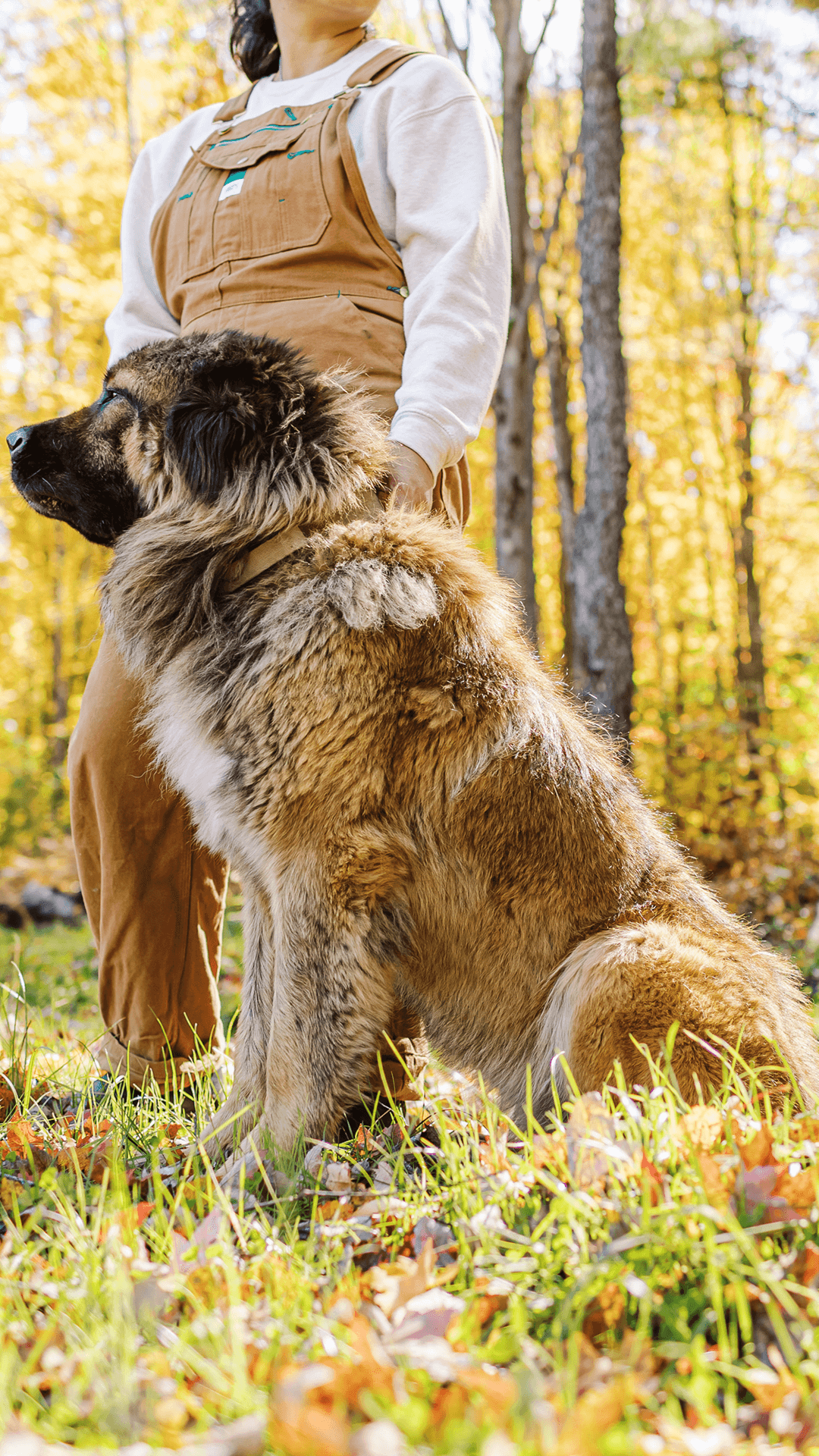
Caucasian Shepherds have a dense double coat that protects them from weather and varies in length and texture between dogs. Routine care should preserve that function while preventing matting, packed undercoat and hidden skin problems.
The dense undercoat changes substantially with season and climate.
Length, density and texture vary, so grooming frequency should follow the dog in front of you.
The goal is a clean, healthy, functional coat rather than a cosmetic silhouette.
Routine grooming
Use grooming to learn the whole dog.
Dense fur can hide changes in skin, body condition, tenderness and small injuries. Regular hands-on care gives you a reason to notice them.
Work methodically rather than only skimming the surface. Areas behind ears, around the ruff, legs and friction points may need extra attention.
Use your hands to monitor ribs, muscle, skin, lumps, tenderness and changes that photographs can hide beneath the coat.
Feet, ears, mouth and body should be touched routinely so maintenance remains manageable when the dog is fully mature.
Seasonal shedding
When the undercoat moves, grooming changes with it.
Seasonal coat changes can be dramatic. During heavier shedding periods, more frequent brushing helps remove released undercoat before it compacts and makes skin inspection harder.
Climate, indoor living, individual coat and health can influence how shedding appears, so a calendar is less useful than watching the dog's coat condition.
Watch the dog, not the date.Increase grooming when loose undercoat, tangles or packed coat tell you it is needed.
Bathing
Clean when needed. Dry thoroughly.
A heavily coated dog can hold moisture close to the skin. Bathing should therefore be followed by thorough drying rather than leaving the dense coat damp underneath.
Use dog-safe products.
Choose products intended for canine skin and coat rather than human shampoo.
Rinse completely.
Dense fur can hold product residue. Thorough rinsing matters.
Dry to the skin.
Make sure the undercoat is actually dry, especially in cool or humid conditions.
Nails, ears & cooperative handling
Teach care before strength makes care difficult.
A mature Caucasian Shepherd is powerful enough that routine maintenance should never depend on physically overpowering the dog. Puppyhood is the easiest time to normalize feet, ears, brushing, mouth checks and calm restraint.
Practical tools
A simple kit is usually better than a cabinet of gimmicks.
The exact tools depend on coat length and density, but owners generally benefit from equipment that can separate the coat, remove loose undercoat and handle tangles without damaging healthy coat.
Slicker or pin-style brush
Useful for routine coat work and surface debris.
Sturdy metal comb
Helps confirm that you have worked through the coat rather than only over it.
Appropriate rake
Useful during seasonal coat release when selected for the dog's coat.
Airflow matters
A suitable dryer can make thorough drying and loose-coat removal much easier.