Rising Predator Pressure Drives Growing Interest in Caucasian Shepherd Guardian Dogs
As wolf and coyote populations expand across North America, livestock producers are rethinking their guardian dog strategies

A convergence of wildlife trends across North America is forcing livestock owners to fundamentally reassess livestock protection as predator populations expand into new territories and demonstrate increasingly sophisticated behavior.
The scale of the challenge is substantial. According to the United States Department of Agriculture, predators killed approximately 367,000 cattle and calves in 2020 alone, with losses totaling $305 million. [1] For sheep and lamb operations, predation accounts for more than forty percent of all deaths annually, exceeding losses from disease or weather combined. [1]
Predators Expand and Adapt
The eastern coyote expansion represents one of the most dramatic wildlife distribution shifts in modern history. Once restricted to western prairies, coyotes now occupy every state in the continental United States. The Detroit Free Press reported confirmed coyote sightings in all eighty three Michigan counties in 2023, including urban areas where the species was essentially unknown two decades earlier. [2]
Gray wolves add another dimension. Montana, Wyoming, and Idaho collectively support more than three thousand wolves, while Wisconsin's population has rebounded to approximately one thousand individuals. [3] Michigan's Upper Peninsula maintains a stable population near 630 animals. [4]
Where coyotes test defenses opportunistically and bears typically act as solitary raiders, wolves operate with strategic coordination. They observe guardian routines, identify vulnerable patterns, and execute coordinated attacks that can overwhelm protection methods designed for simpler threats.
Research published in the Journal of Wildlife Management reveals that coyotes in human modified environments display markedly bolder behavior and reduced avoidance of human activity compared to their rural counterparts. [5] Traditional deterrents including noise makers, motion activated lights, and even periodic human presence are losing effectiveness as predators learn to distinguish between actual threats and harmless disruption.
Montana's 2024 livestock loss report documented a twenty three percent increase in confirmed wolf depredations, with ranchers reporting that wolves drew guardian dogs away through coordinated movements, then attacked during brief windows of reduced protection. [6]
Guardian Dog Selection Becomes Critical
Guardian dog use among sheep operations has increased thirty one percent since 2014, according to the USDA National Agricultural Statistics Service. [7] Yet effectiveness varies dramatically between operations. Research from Utah State University's Predator Research Facility found that operations using guardian dogs specifically developed for independent decision making in complex terrain experienced seventy three percent fewer losses than those relying on dogs bred primarily for human directed work or social tolerance. [8]
This distinction has profound implications. Some livestock producers are exploring guardian breeds specifically developed for apex predator pressure and independent operation across large territories with minimal human supervision.

The Caucasian Shepherd Difference
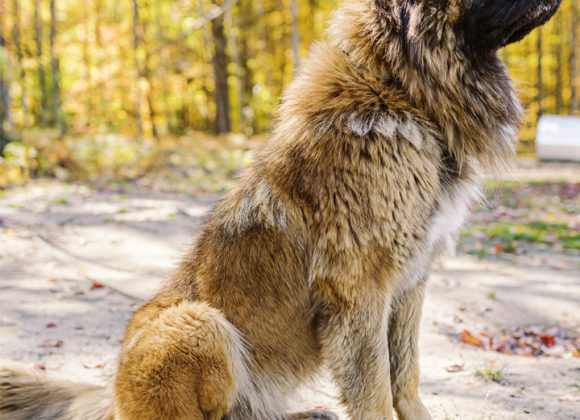
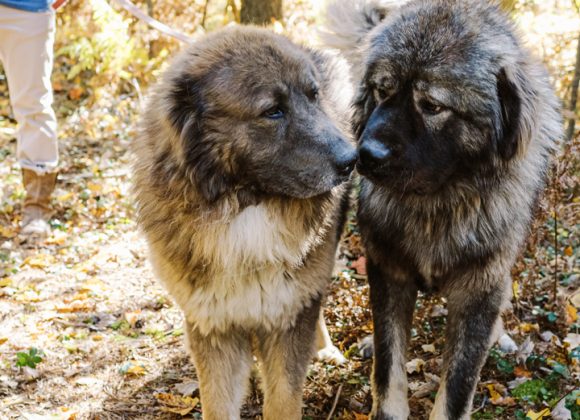
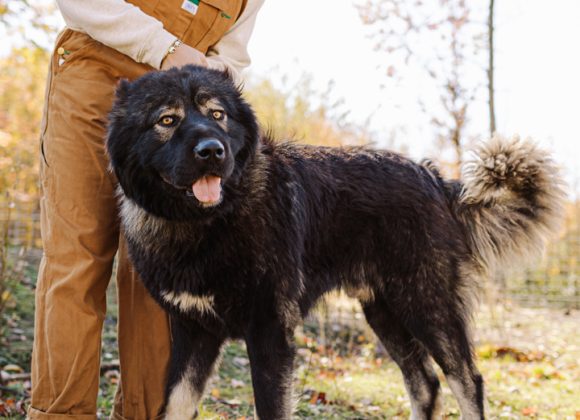
Brotherbear Acres, a Northern Michigan preservation program specializing in Caucasian Shepherd guardian dogs, has been documenting this shift through landowner consultations and placement assessments. The program focuses on matching Caucasian Shepherds, also known as Caucasian Ovcharka, to properties where the breed's particular characteristics align with actual protection requirements. [9]
Interest in Caucasian Shepherds has grown specifically in response to changing predator dynamics. Operations in the Northern Rockies, Upper Midwest, and Pacific Northwest have increasingly sought guardian options that align with their specific challenges. The breed appeals to producers facing large properties requiring guardians capable of managing extensive territories independently, mixed predator pressure including wolves where coordinated pack tactics demand sophisticated responses, rugged terrain where strategic positioning matters more than constant patrolling, and limited human supervision where guardians must make autonomous decisions.
"Guardian breeds developed in regions with apex predators, such as the Caucasian Shepherd from the Caucasus Mountains, exhibit different assessment and response patterns than breeds developed primarily for sheep work in more controlled environments. The Caucasian Ovcharka's heritage includes centuries of protecting livestock from wolves and bears in rugged mountain terrain with minimal human oversight. That distinction matters far more today than it did twenty years ago, particularly where predator pressure has intensified."
Producers utilizing Caucasian Shepherds report several operational characteristics that align well with complex contexts. The dogs demonstrate strong territorial intelligence, mapping properties and positioning strategically rather than following set patrol routes. Their independent decision making capability means they assess and respond to threats without waiting for human direction. The breed's calm, deliberate response style often proves effective against wolves that test and probe guardian behavior before committing to attacks.
Looking Forward
Wildlife ecologists anticipate continued changes in both predator distribution and behavior as climate shifts, habitat modification, and conservation initiatives reshape ecosystems. For livestock producers, particularly those operating large or remote properties, passive protection approaches alone prove insufficient against predators that learn, adapt, and coordinate.
The operations achieving success share common characteristics: they treat predator pressure as a dynamic challenge requiring ongoing assessment, they invest in understanding both their environment and the predator communities within it, they select protection methods based on actual documented threats rather than tradition, and they remain willing to adjust approaches as conditions change.
The trend reflects a broader maturation in how North American livestock producers approach guardian dog selection. Rather than defaulting to familiar options or following regional convention, operations are increasingly matching guardian capabilities to documented predator pressure and property characteristics. For many operations facing apex predator pressure, this evolution is leading to a fundamental rethinking of what guardian breeds best serve their specific circumstances.
Interested in Learning More About Caucasian Shepherd Guardian Dogs?
Discover how Brotherbear Acres can help match the right guardian dog to your operation's specific needs.
Contact Us | Learn About Our ProgramAbout Brotherbear Acres
Brotherbear Acres is a Northern Michigan preservation program focused on Caucasian Shepherd (Caucasian Ovcharka) guardian dogs raised within active land and livestock environments. The program emphasizes functional genetics, context appropriate breed selection, and education around predator pressure assessment for livestock operations across North America.
Sources
- USDA National Agricultural Statistics Service. "Sheep and Goat Predator and Nonpredator Death Loss in the United States, 2015." Available at: https://www.nass.usda.gov/Publications/Highlights/2016/ShpGtPredDthLss.pdf
- Detroit Free Press. "Coyotes now confirmed in all 83 Michigan counties." 2023. Available at: https://www.freep.com
- U.S. Fish and Wildlife Service. "Northern Rocky Mountain Wolf Recovery Program." Available at: https://www.fws.gov/program/northern-rocky-mountain-wolf-recovery
- Michigan Department of Natural Resources. "Michigan Gray Wolf Management Plan." 2023. Available at: https://www.michigan.gov/dnr/managing-resources/wildlife/gray-wolf
- Journal of Wildlife Management. "Behavioral responses of urban coyotes to human food subsidies." Available at: https://wildlife.onlinelibrary.wiley.com/journal/19372817
- Montana Fish, Wildlife & Parks. "Livestock Loss Reduction and Mitigation Program Annual Report." 2024. Available at: https://fwp.mt.gov/conservation/wildlife-management/wolf/livestock-loss
- USDA National Agricultural Statistics Service. "Sheep and Goats." 2022. Available at: https://www.nass.usda.gov/Surveys/Guide_to_NASS_Surveys/Sheep_and_Goats/
- Utah State University Extension. "Livestock Guardian Dogs: Protecting Sheep From Predators." Available at: https://extension.usu.edu/livestock/
- Brotherbear Acres. "Observations on Regional Predator Pressure and Guardian Dog Placement." Based on landowner consultations and communications, 2020 to 2024. Available at: https://www.inc.com/profile/brotherbear-acres